

Rituals, renewals and joy along with the Nile
By Laura Ranieri Roy
Think of kicking up your heels, sipping copious amounts of beer, indulging in heavy carbs, and dancing the night away as a trendy trend? Well, think again! The ancient Egyptians were ahead of the curve by 3500 years and beyond. Their calendar was ablaze with festivals, each with a specific reason to celebrate – a god’s birthday, a man’s honor,… “Drunkenness” pure and simple.
But it was during the summer months, when the Nile flooded and brought the land to life, that two memorable festivals really lit up the country. Welcome to the ultimate ancient Egyptian summer parties!
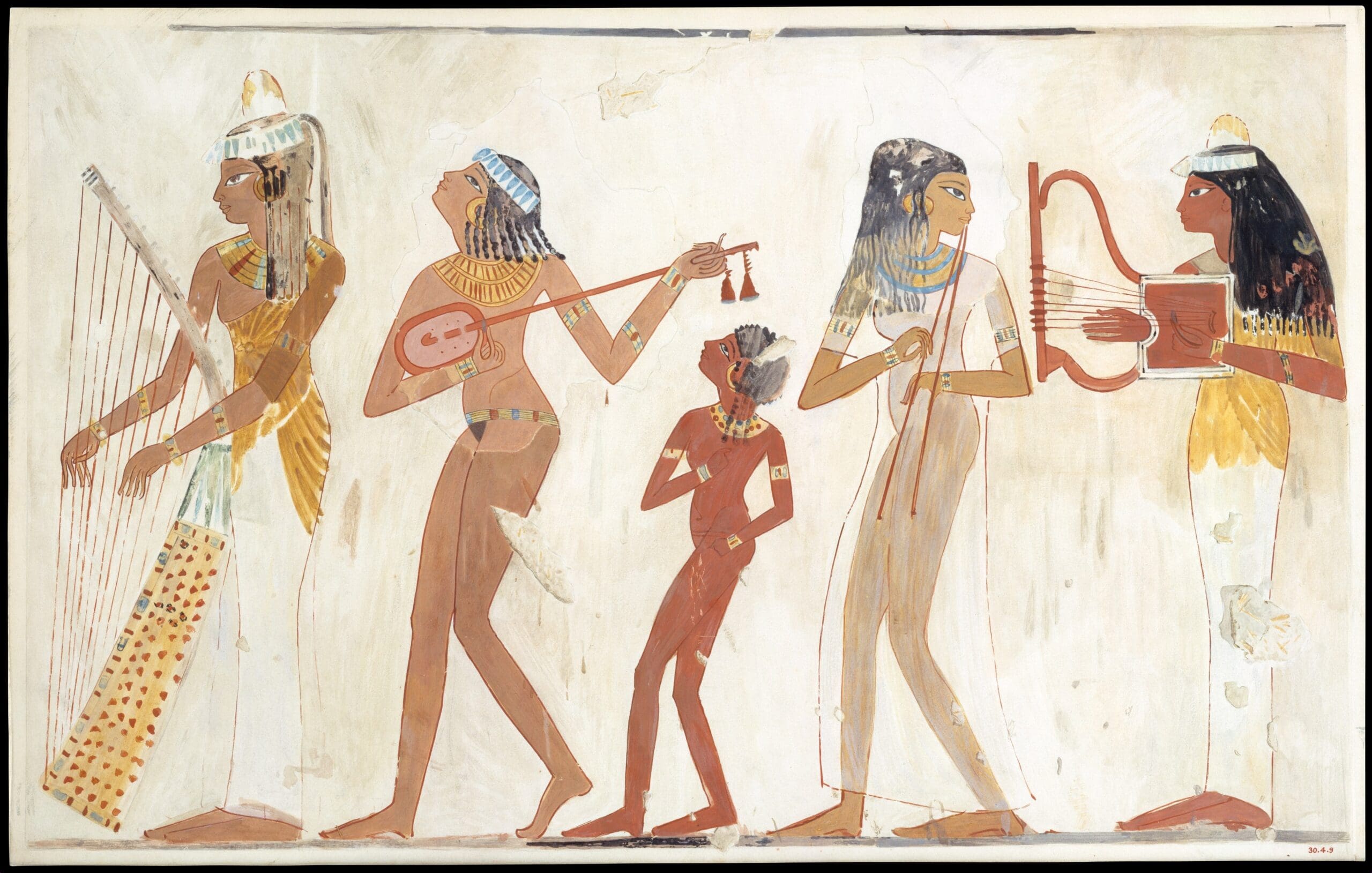
c) Charles Wilkinson, drawing from a relief of the 18th Dynasty
Among the most important and joyous were the Opet Festival and the New Year Festival, both of which flourished during the Egyptian summer—when the fertile flood waters of the Nile ushered in the season of renewal. These festivals, while distinct, were united in purpose: to renew life, to unite the divine with the earthly, and to affirm maaat, or divine order. They reflect the Egyptians’ deep respect for the harmony between the spiritual and natural worlds.
Opat Festival: Joyous Procession of Renewal
The Opete Festival was a grand spectacle of the Theban religious calendar, designed to resurrect not only the pharaohs but also the gods themselves. The king of the gods, Amun, was at the center of the festival, and the ritual celebrated his sacred marriage with his consort. This divine union ensured the continued vitality of the pharaoh and the health of Egypt itself.
The festival centered around a grand procession where Amun, Mut, and their son Khonsu, the statue of the moon god, were carried from Karnak Temple to Luxor Temple. The two-kilometer route, which lined the famous Avenue of the Sphinx, was an elaborate spectacle filled with music, dance, acrobats and cheering crowds. Pharaohs like Hatshepsut and Ramses II ensured that the procession was nothing short of extraordinary, creating unforgettable moments of divine renewal.
But the Opet festival was not just for royals and priests – agriculturalists, who were taking a break from tending their fields during the inundation of the Nile, gathered to enjoy the profits. There was beer, bread, and a whole lot of food to go around. And, for those lucky enough, they might even catch a glimpse of the Holy Triad as they processed into their barracks. Even better? You can find an oracle! If you had a question, the priests would move the barak forward for “yes” and back off for “no.” Just make sure you make a good impression on those priests!
New Year’s Festival in Dendera: Commencement of the year at the beginning of the flood season
Now, if the Opet Festival wasn’t enough to fill the summer, let’s talk about the New Year Festival. Held at the magnificent Hathor Temple of Dendera, the festival is associated with the rising of Sirius and the beginning of the annual inundation of the Nile. It wasn’t just about farming. It was a cosmic celebration where the divine and earthly realms met.
Hathor, the goddess of love, joy, fertility, music, and a whole list of other wonderful things, took center stage. During the festival, his statue was carried from a crypt of the temple to the western steps, where he would receive the first rays of the rising sun. This symbolic act represented Hathor’s union with the sun god, reviving not only herself but also the land and people of Egypt. The statue’s return to the bottom of the eastern staircase reflected the cyclical nature of life – always renewing, always returning to its source.
Pilgrims traveled from far and wide to participate in these rituals, and similar ceremonies took place at temples such as Edfu, where a statue of Horus ascended to the ceiling shrine. It was indeed a wonderful festival, where the rays of the sun, symbolizing the spiritual rebirth of the land, renewed their divine power illuminating the statues of the deities.
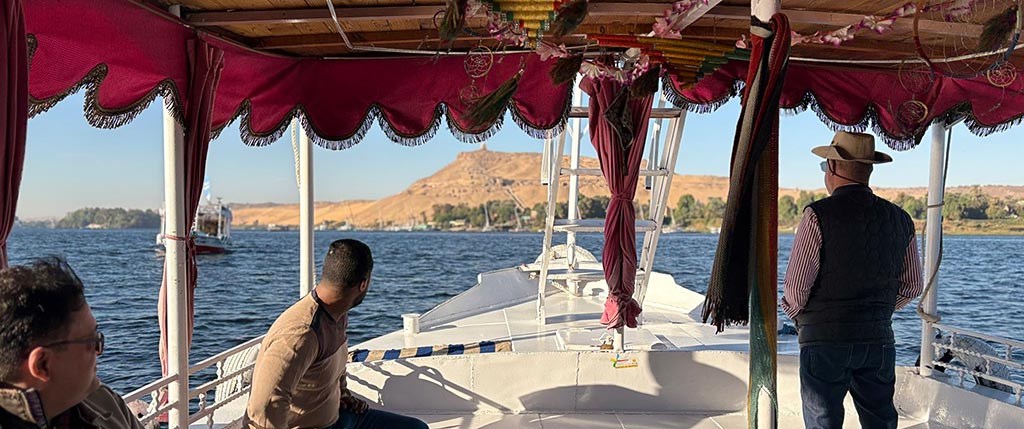
Summer in Ancient Egypt: A Season of Joy and Change
The summer months, marked by the rising Nile, weren’t just about agricultural renewal—they were spiritual moments of change. Opet and New Year festivals were more than just parties. They were profound rituals that connected gods and people, the rhythms of nature and human existence.
Legacy and reflection
Opet and New Year’s festivals have persisted through the centuries, evolving with new families but always holding to their core themes of renewal, unity, and divine favor. Today, echoes of these ancient ceremonies can be felt in modern festivals along the Nile. As the sun sets over the temples of Karnak and Luxor, the spirit of those happy summer days lives on in the eternal rhythm of river, star and sun, all moving in harmony to renew Egypt once again.
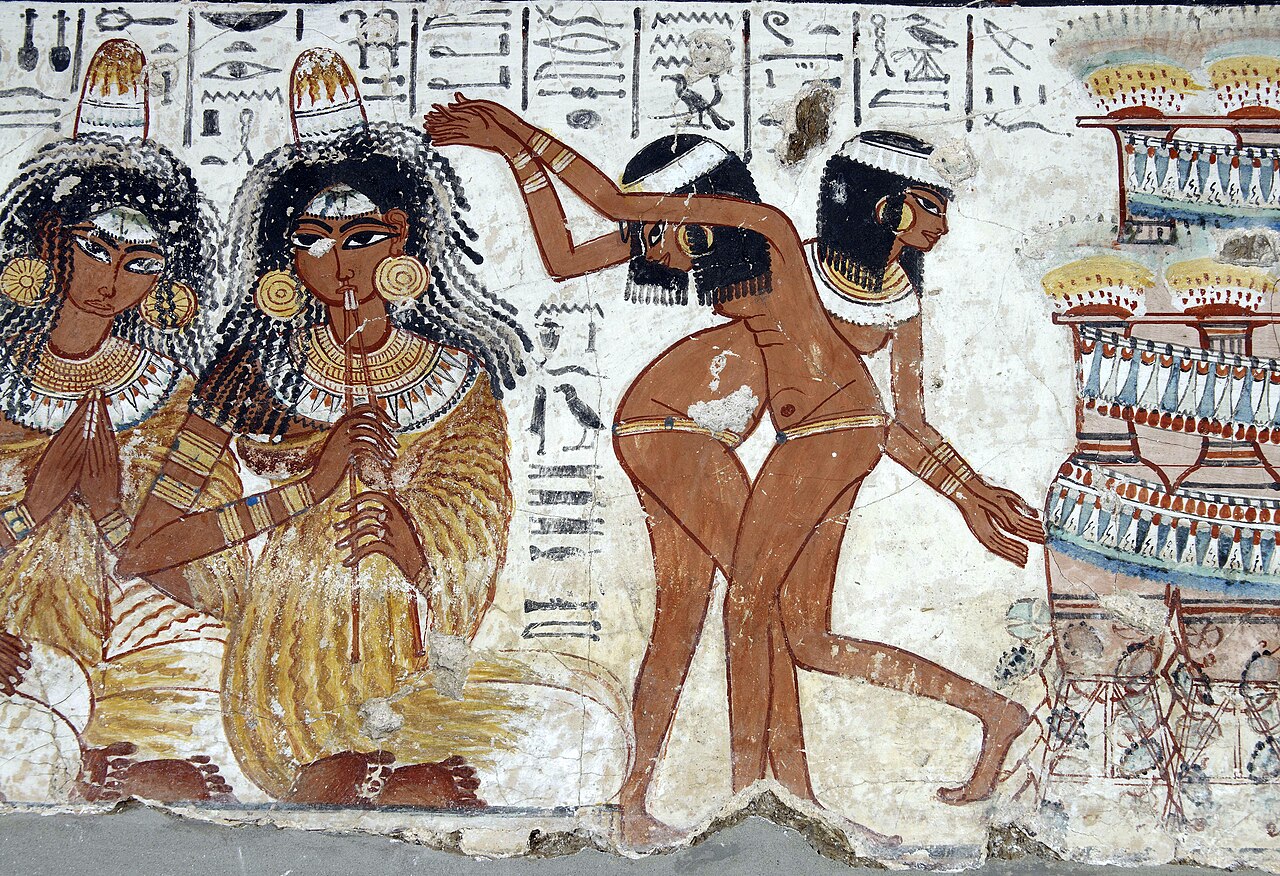
Join the party.
So, the next time you’re sipping a summer drink or dancing the night away, remember: the ancient Egyptians were throwing legendary parties long before us. While we may not have guild statues or a river as majestic as the Nile, we can still celebrate renewal, connection and a little divine favor. The eternal rhythm of the Nile is the way to revive us all. What can we take away from these ancient Egyptian festivals? Even if you’re not chowing down on heavy carbs or doing acrobatic flips, we can definitely relate to how this sunny season is a time for relaxation, happy gatherings, and recharging our batteries — so we, too, can feel refreshed, revitalized, and inspired.


