

Have you ever found yourself drowning in tasks repeatedly, I wish there was a way to make them automatically without a precision sacrifice? Imagine taking hundreds of rows in a spreadsheet, creating unique content for everyone, and updating it without lifting a finger. Insert N8nA modern automation tool that enables you to make workflows according to your needs. Whether you are managing data, developing content, or smooth the process, its ability Loop in a way effectively through items Can unlock a whole new level of productivity. In this teaching feature, how we will use the loop in N8N, will apparently break the complex process into practical steps.
In this tutorial of Shri AI, you will not only understand how to create a workflow that is connected without interruption. Google Sheets and OpeniBut you will also discover how to take action on the data row through a row, dynamically prepare and update precision content. By forming A Loop on Items node This is to include the error -dealing methodology, this guide will make you automatic tools to automate the most painful tasks. Whether you are eager to be an experienced automation or a curious initial, this walkthrough by Shri AI | AI automation offers practical insights to help you do better, not difficult. Let’s find out how you can repeatedly convert workflows into expanding, automated systems that really work for you.
Floose automatically with N8N
Tl; Dr Key Way:
- Automation tools such as N8N data handling, content production, and task management automatically automatically streamline workflows.
- Google Sheets in N8N allow seamless data retrieval and updates, allowing structural datases to effectively handling.
- In N8N, “loop over items” nodes individually process rows, which is ideal for dynamic operations precise and sequence of data.
- Open AI integration enhances workflows with the production capabilities of the latest material, such as producing summary or drafting specific indicators.
- Workflow correction features such as completion tracking, processing limits, and improving large datases for major datases, scalebuability, and improvement.
The first step in building your automatic workflow is to create a new workflow in N8N. Start by adding A Manual trigger node. This node is necessary to manually launch a workflow, which is especially useful during testing and debugging stages. Once the trigger comes to its place, you can move forward to build your workflow, making sure that each component works according to the intention.
1: Connecting Google Sheets
Google Sheets integration is an important component when you work with structural data. To configure this integration, follow these steps:
- Add A Google Sheets node To connect with your spreadsheet to your own workflow.
- Create the Node of access to the specific sheet with which you intend to work, describe the sheet name and the limit as needed.
- Set the credentials by connecting your Google Account to N8N and allowing data to access and updates.
Once the formation, the Google Sheets node enables you to recover the data rows from your spreadsheet, and provides the input required for the subsequent processing stages.
2: Looping through rows
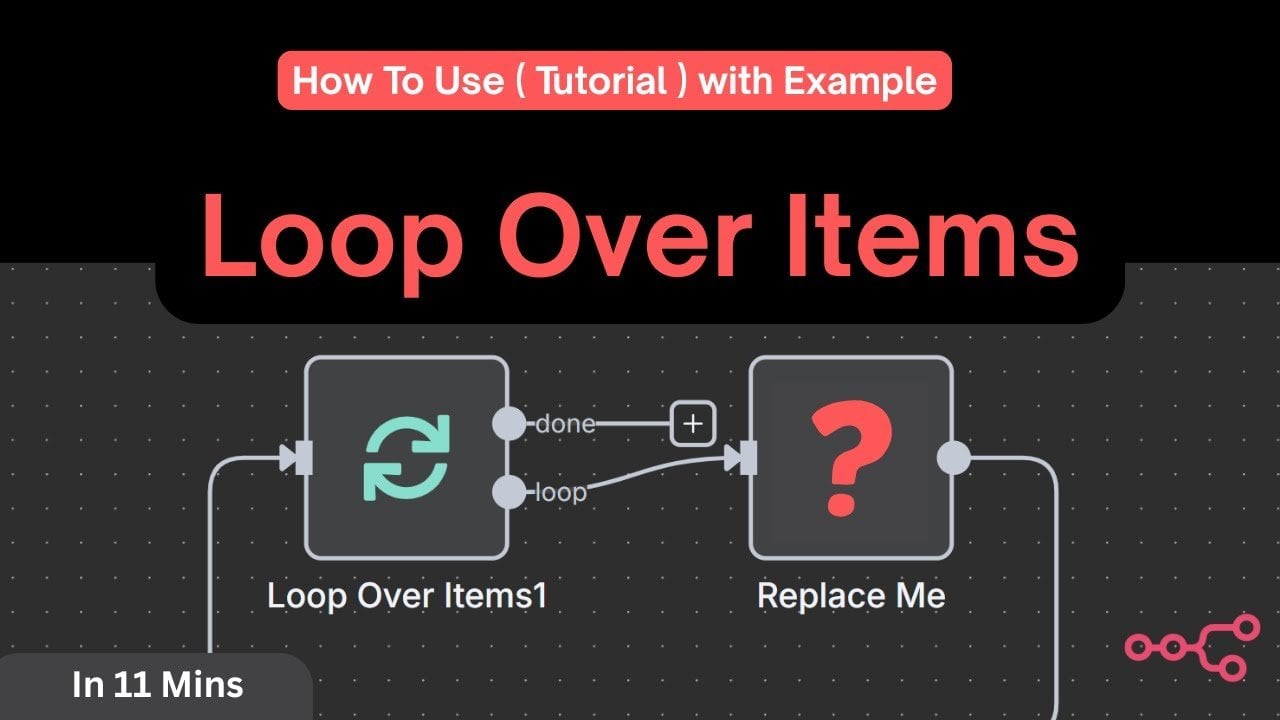
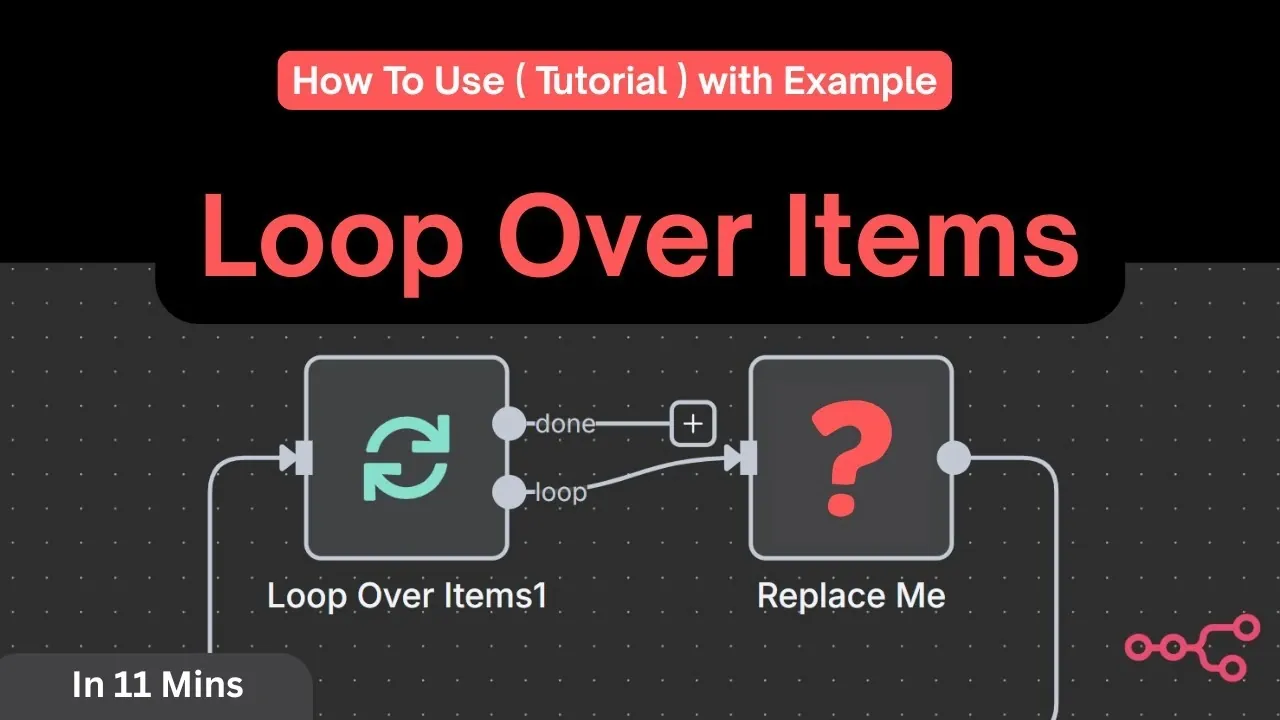
Individually, you will need to implement a looping mechanism to take action on each line of data. Loop on Items node N8N is designed for this purpose. The way to create it is:
- Set the size of the batch to one to ensure that each row is processed by the order, keeping the explanation and control over the workflow.
- Create the Loop to handle each row freely, which is especially important when working with APIs such as Openi, which requires unique inputs for each application.
This setup ensures that each row of data is implemented in a correct and systematic manner, which makes it ideal for work flow, which includes dynamic or rows related works.
For example – N8N (Items on Tutorial on Loop Over Items Tutorial) How To Use Loops
Improve your knowledge on N8N by seeking selection of articles and leaders on this topic.
3: Connecting Openi
In your workflow, the integration of the Openi allows the latest material production capabilities. To configure Openi nodeFollow these steps:
- Provide your open API credentials to verify the node and enable the service access.
- Explain the indicators according to the issue of your specific use, such as creating summary, making keyword -based text, or answering questions derived from your dataset.
For example, if you have a list of blog titles in your Google Sheet, you can use Open AI to produce summary or draft content for each title. Make sure your indicators are clear and specific to get the best results.
4: Updating Google Sheets
After producing content with Open AI, the next step is to update relevant rows in your Google Sheet. Use Update the row action To write the content produced in the Google Sheets Node on the sheet. How to do it is:
- To ensure that map the queue number that updates in the right row, while maintaining the integrity of the data.
- Link content fields in node configuration to settle appropriate columns with the data produced.
This step completes the loop, allowing your workflow to update the dynamic process and data without manual intervention.
Increase your workflow
To further improve your workflow, consider implementing the following increase:
- Following tracking: Add a “carried” or “processed” column to your Google Sheet that has already been processed. This helps you avoid developing development and duplication efforts.
- Processing limits: Use A Restricted node To control the number of rows in one run. It is especially useful for handling large datases or following the API rate limits.
- In dealing with error: Methods to deal with error, such as conditional nodes or re -try to address potential issues such as API timeout or lost data.
These features enhance your workflow reliability and scales, ensuring that it also performs effectively in variations.
Construction of an expanded automation system
Following this guide, you can create a strong and expanding workflow in N8N that automatically automatically manufactures materials such as material production and data updates. The smooth integration of Google Sheets, Open AI, and Looping mechanism provides a powerful solution for managing large datases with minimal manual effort. With cautious setting and thorough testing, this workflow can save you important time and resources, which can focus on more strategic and creative tasks.
Media Credit: Shri A.
Filed under: AI, Guide
Latest Gack Gadget deals
Developed: Some of our articles include links. If you buy some of these links, you can get the Gack Gadget adjacent commission. Learn about our interaction policy.


