
A 5th century funerary complex featuring rich warrior and equine burials has been discovered in Horbourg-Wihr, near Colmar, in Alsace.
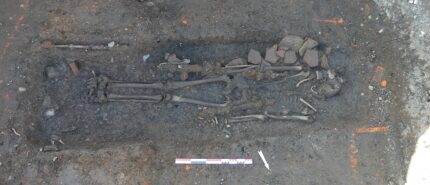
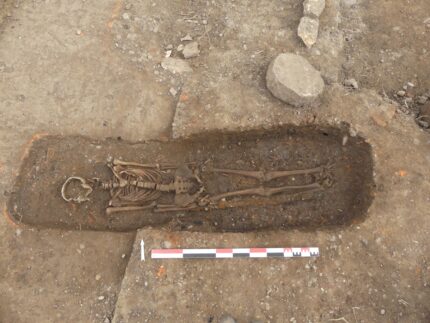
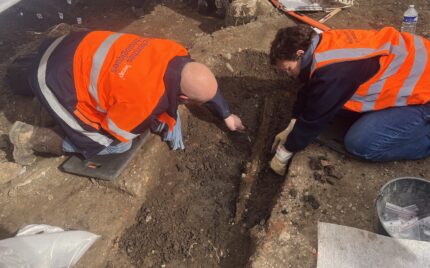
France’s National Institute for Preventative Archaeology (INRAP) has been excavating the site on the right bank of the Ill river in anticipation of new housing construction. This area was the center of a Gallo-Roman civilian settlement a short distance from the Rhine limes (the ancient Roman boundary line). The excavation found remains of dwellings and roads attesting to a continuous occupation from the 1st to the 3rd century.
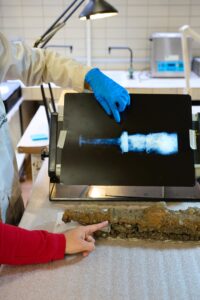
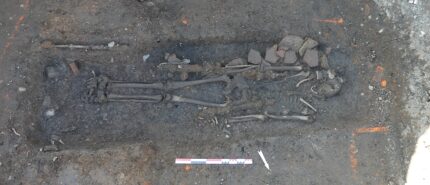
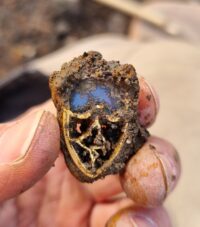 After sporadic occupation in the 4th century, part of the site was converted into a burial complex in the second half of the 5th century. Two of them stand out for the high quality of grave goods, which include a scramasax sword, a shield and an angon (a type of javelin typically used by Germanic peoples in the early Middle Ages).
Decorative elements of clothing and weaponry, crafted in gold and silver cloisonné with garnets, confirm the privileged status of these deceased. Two other burials are distinguished by grave goods of a female nature. These include pairs of silver-gilt looped brooches, silver bird-shaped brooches, glass bead necklaces, belt buckles, and a bone comb. The equines, along with their harnesses, were buried within the burial complex itself.
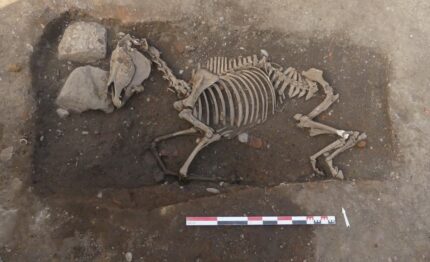 These fine funerary furnishings accompanied evidence of wear and tear on the bones from poor health and injuries from sharp blades, indicating warrior deaths, as do the burial of two horses.
While this archaeological excavation enhances our understanding of the development and organization of the Gallo-Roman vicus in the northwest sector of Horbourg-Wihr, its primary significance lies in the discovery of a unique burial complex linked to the Migration Period. The exceptional nature of this find stems particularly from the scarcity of sites documenting Germanic settlement during this chronological period in the region. This new data will undoubtedly revitalize research on the dynamics of settlement in the region and the upheavals that marked this territory in the second half of the 5th century .