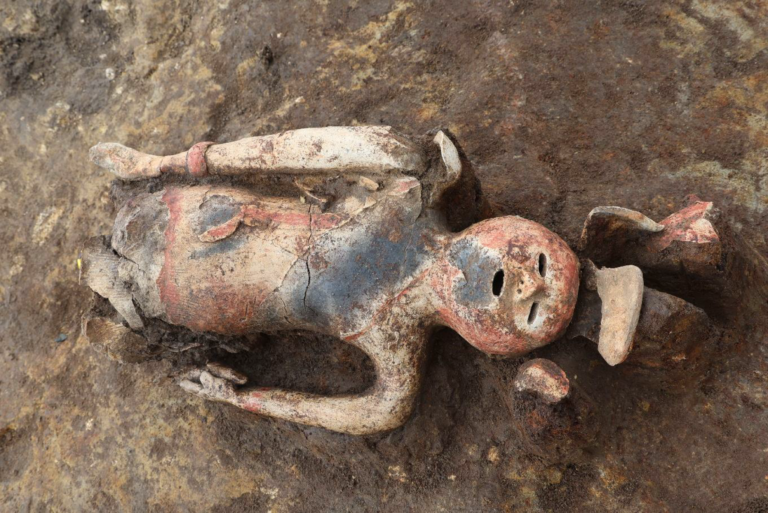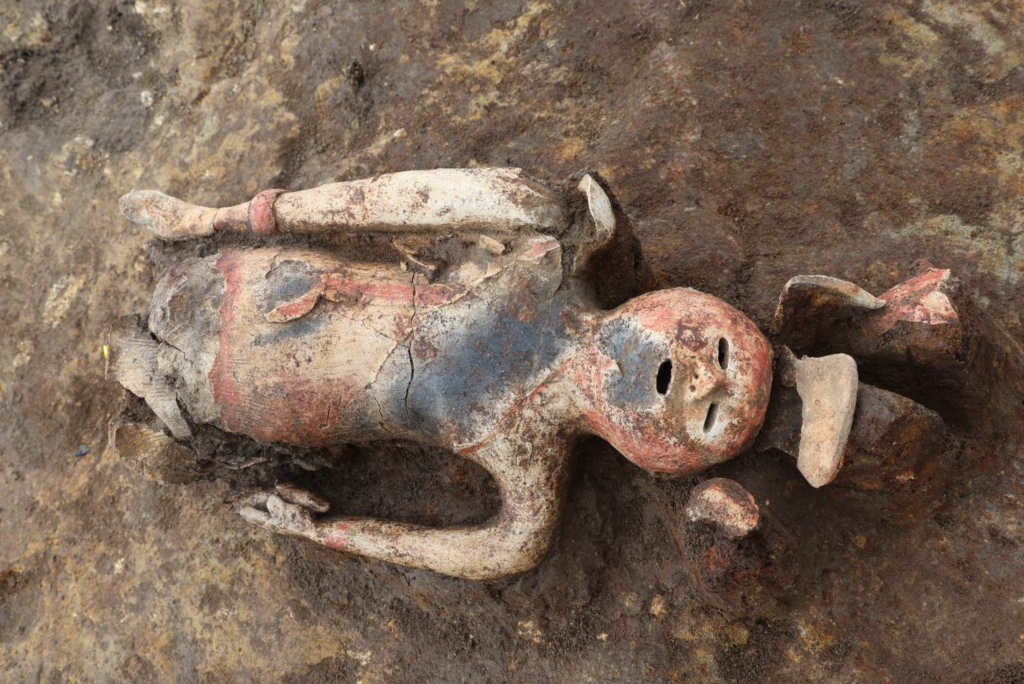

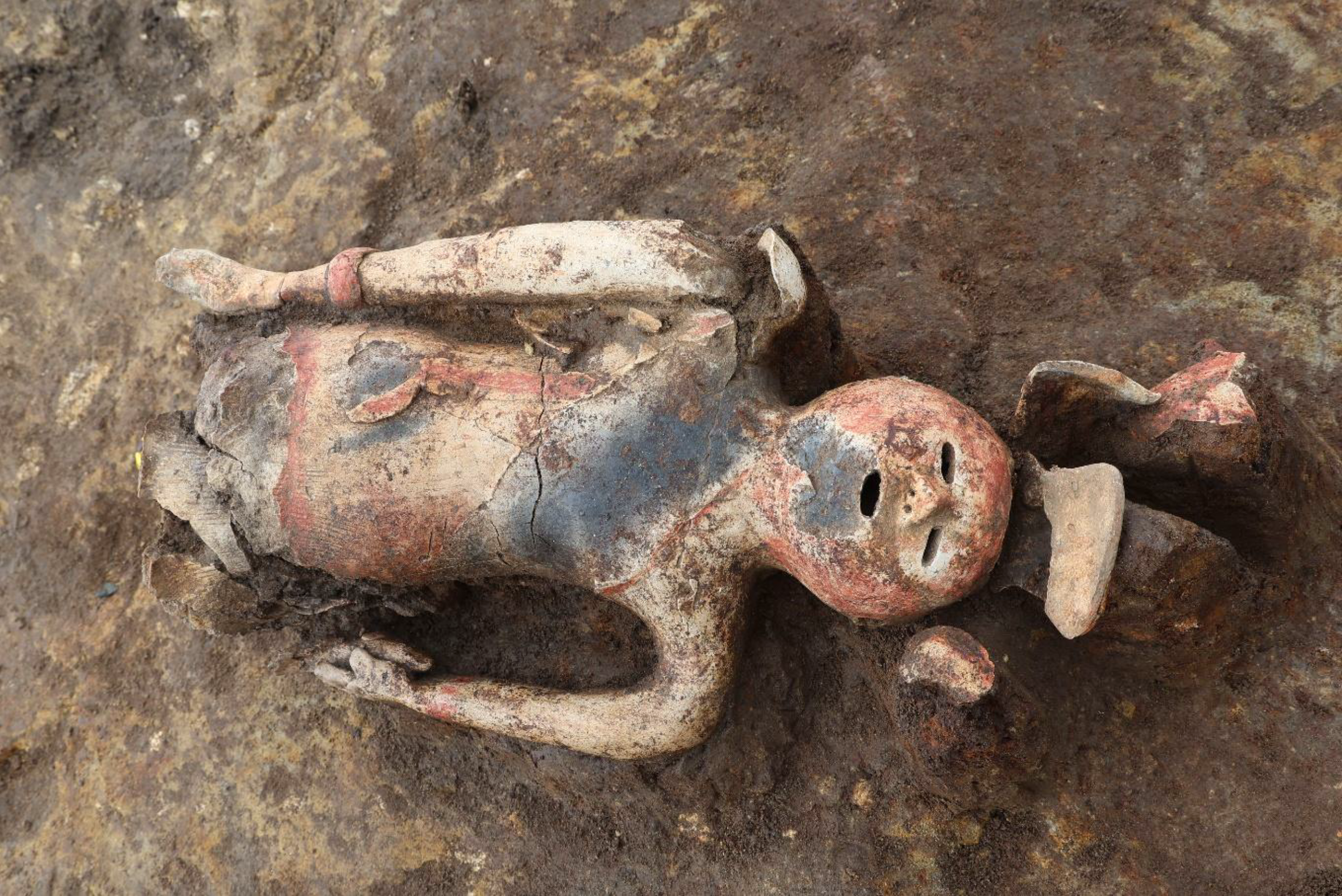
An excavation of a late 5th century burial mound in central Japan has uncovered a clay figurine representing a female shaman (miko). The figurative clay sculpture, a haniwa, is well-preserved, with its features still finely detailed and extensive surviving red paint.
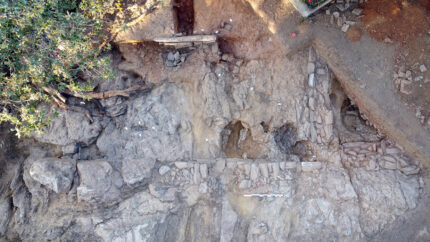
Excavations at the Nishikaminomiya Site began in 2020 as part of a Tone River improvement project. Since then 11 burial mounds from the Kofun period have been discovered. The largest mound is Tumulus No. 1 at approximately 160 feet long. It is surrounded by a moat is 60 feet wide. The haniwa was discovered in this year’s excavation of the southern end of Tumulus No. 1 adjacent to the Tone River. It had rolled down a protruding section of the mound into the moat.
Haniwa were made of unglazed earthenware and placed on grave mounds as protective markers. The figural haniwa were typically sculpted on top of a simple cylinder that had been the earliest form of the statue in the 3rd century. The cylinder was buried leaving the figure above ground to mark the burial sites.
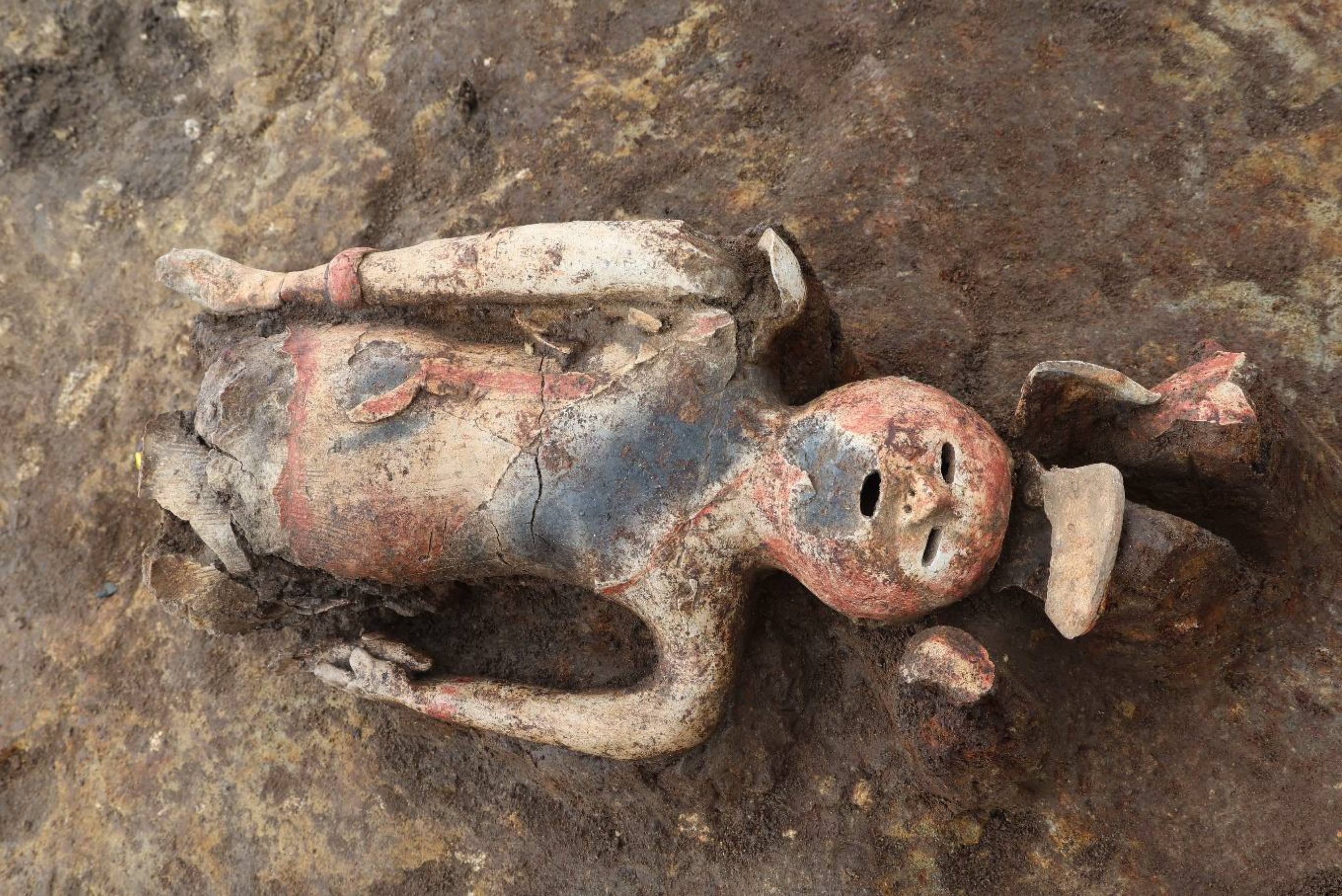
The newly-discovered example is only a torso and head (the buried base has broken off) and is about 16 inches high. It depicts a woman wearing a sash with her hair styled in the Kofun Shimada (topknot) identifying her as a shaman. The top of the head is made of clay cord, conveying with its texture the tied hair. The face, sash lower section of the garment and bracelet on her right wrist are painted red. She holds a rod-shaped object in her left hand that was used in religious rituals. Made in the second half of the 5th century, it is one the earliest anthropomorphic haniwa to have been found in the Gunwa Prefecture.
Miko were popular subjects for haniwa. In the Kofun period, miko performed religious rituals at Shinto shrines and temples, falling into ecstatic trances to relay the words of the gods to worshipers. Historians believe miko held significant religious and political authority in Kofun society, and their visibility on the tombs of the elite confirms they figures of importance and authority.
Excavation is now complete. The haniwa will go on display next week at the Gunma Prefectural Museum of History.