
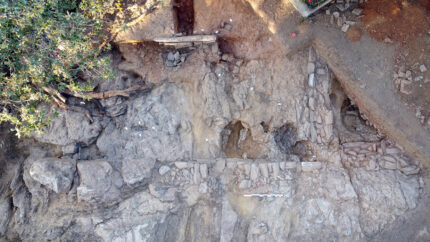
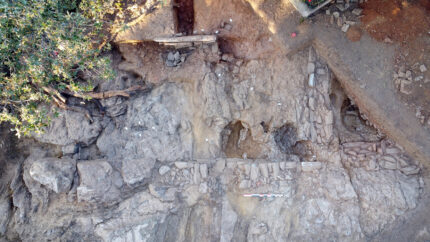
 The remains of a settlement with a domestic space carved out of built into the bedrock has been discovered near the Meria marina in Cap Corse, Corsica. The settlement dates to the 4th century A.D., and is likely connected to a mooring structure from the same period found below the settlement last year.
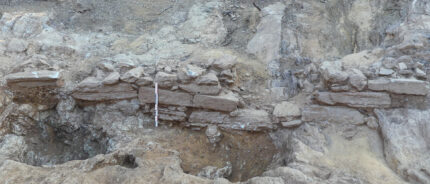 The structure was unearthed in a preventative excavation prior to planned construction of a house on the prime location less than 100 meters (328 feet) from the shore of the beautiful blue Bay of Meria on the Tyrrhenian Sea. The peninsula is archaeologically significant, so an excavation before construction was required by law.
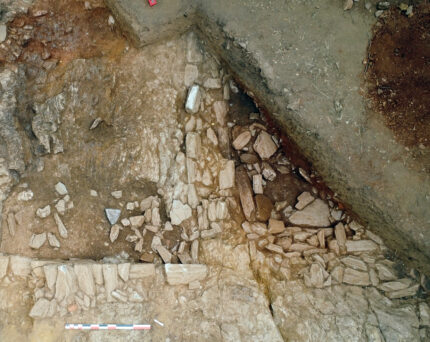 The masonry building has two parts and is built into the bedrock. The exposed schist rock was carved deliberately to accommodate the foundations of the new building. The builders then used the removed schist to make said foundations, carefully cutting it into square blocks. The blocks were then laid in an alternating stretcher (lengthwise blocks) and header (perpendicular blocks) pattern within the masonry wall.
The solid bedrock was integrated into the building too, as the interior facing of the masonry walls, extending past the edges of the blocks. Large monoliths of schist were used to partition the rooms, kept in place with stone wedges and wooden posts.
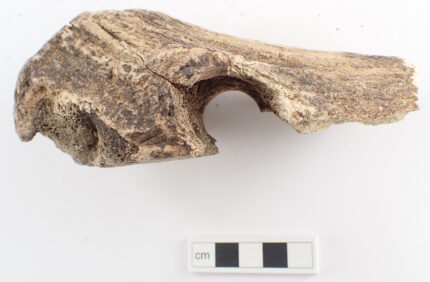
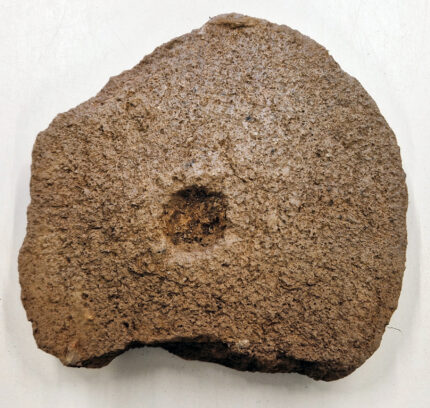
Several refuse pits located in the corners of the building’s various rooms contained mostly ceramic fragments related to cooking practices, glassware, iron tools, and even a grinding stone (catillus) . All these elements point to the domestic sphere and support the functional interpretation of this building as a dwelling. Finally, several postholes with stone supports are scattered throughout the building and could be the negatives for wooden supports for a tiled roof, as suggested by the presence of numerous tegulae ( roof tiles) in the abandonment layers.
 Ceramic fragments from Late Antiquity found at the dwelling and from last year’s excavation of the ancient pier are rare on the Corsican archaeological record. They are imports from the Mediterranean trade networks that otherwise seemed to miss the island, so the evidence suggests that Meria had a unique position as a commercial outpost from the Roman period to the early Middle Ages. Copious metal, glass and lithic materials attest to a comparatively high level of artisanal production accessible for personal use. An earlier discovery of a white marble altar table support with an inscription dedicated to the emperor Claudius also supports the hypothesis that Meria had a larger settlement with regular interactions with the wider Roman world in Mediterranean.