
Two rare deer antler axes dating to the Bronze Age have been unearthed outside Löddeköpinge in Skåne, Sweden. Similar finds have been made in Denmark, where 155 Bronze Age axes have been found mostly as deposits in wetlands and bogs, but only a handful are known from Sweden.
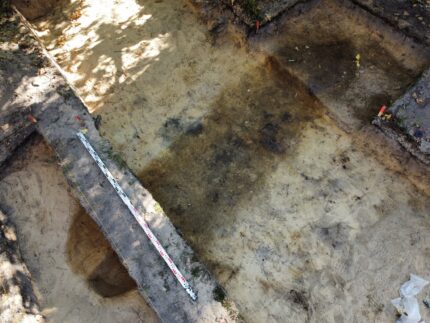
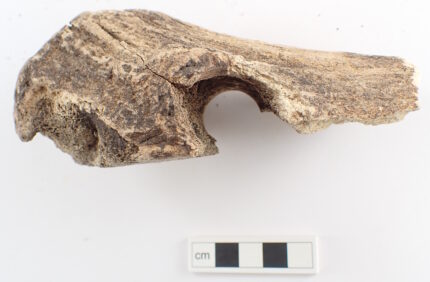
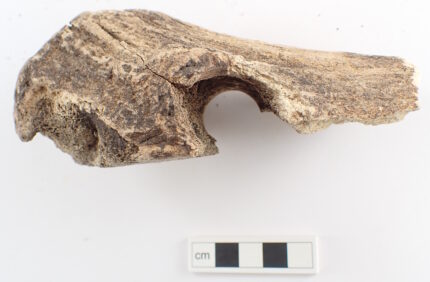 The antler axes were found in excavation pits that have been preliminarily dated to between 1700 and 500 A.D. One of them is heavily worn with broken pieces, but the other is in good enough condition to make it immediately clear that it was worked and designed. It has a pierced hole in the center where a wooden shaft went through and a carved, ground-down cutting edge.
While deer antler axes were common in Sweden during the Mesolithic era (ca. 10,000–4000 B.C.), they disappear from the archaeological record during the Neolithic period as nascent farming settlements developed new tools and used different materials. They reemerged in an altered form in the Bronze Age. It’s not clear what their function was, but researchers at the Lejre experimental archaeology center in 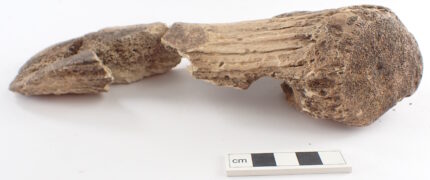 Denmark with newly manufactured deer antler axes found that they are extremely effective at cutting down trees, chopping dry wood and splitting wood.
Archaeologists also hypothesize that Bronze Age antler axes in Denmark had ritual or ceremonial purposes. Of the 155 known examples in Denmark, 59 of them were decorated with motifs including dotted circles, wheel crosses and spirals. It’s possible the ornamented examples had symbolic meaning beyond the practical use of the tool.