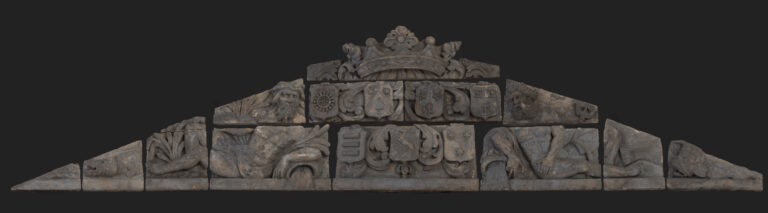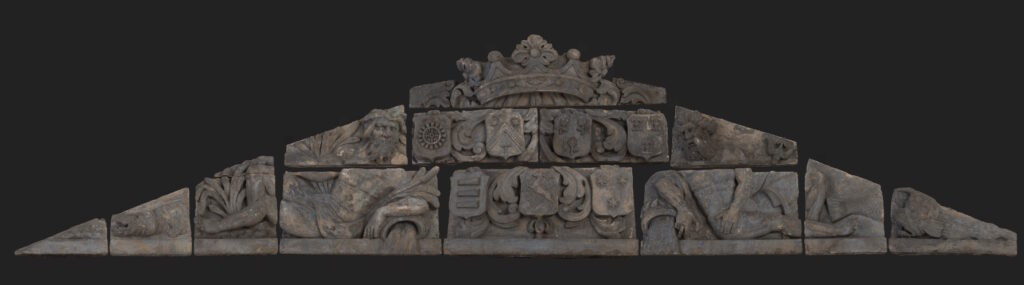

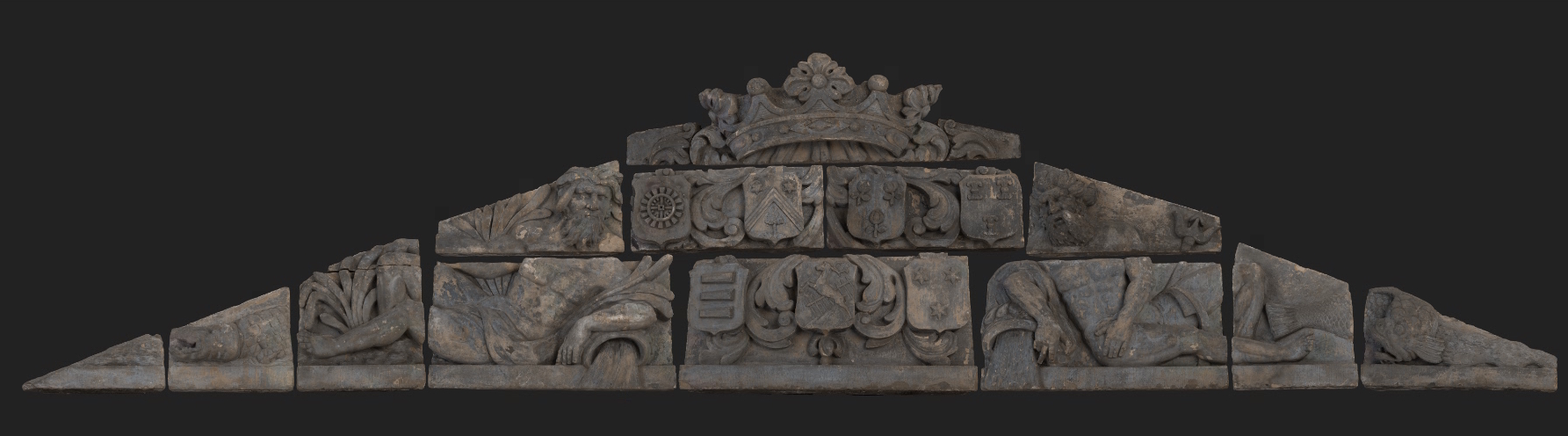
A massive sandstone pediment weighing five metric tons that once topped the entrance to the 18th century plague hospital in Rotterdam is returning to its original site after 115 years in storage.

The triangular tympanum is 9.4 meters (31 feet) wide, more than two meters (6.6 feet) high and features seven coats of arms from members of the Rotterdam City Council bounded by two allegorical figures representing the rivers Meuse and Rotte with bound the city of Rotterdam.
 The Pesthuis was built to house plague victims in 1716. It was the first building constructed south of the New Meuse river in what is now the Feijenoord neighborhood, intended to quarantine patients with infectious diseases away from the heart of the populated city. A century later, the Nederlandsche Stoomboot Maatschappij (Dutch Steamboat Company) made the Feijenoord one of the city’s most active industrial areas.
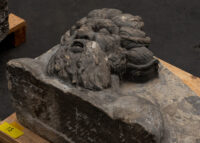
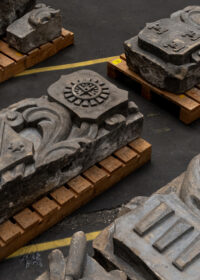 The Pesthuis was demolished in around 1900. Only the tympanum was saved. In 1910, it entered the collection of the Museum Rotterdam, but was never displayed. Its sheer massiveness made it challenging to exhibit.
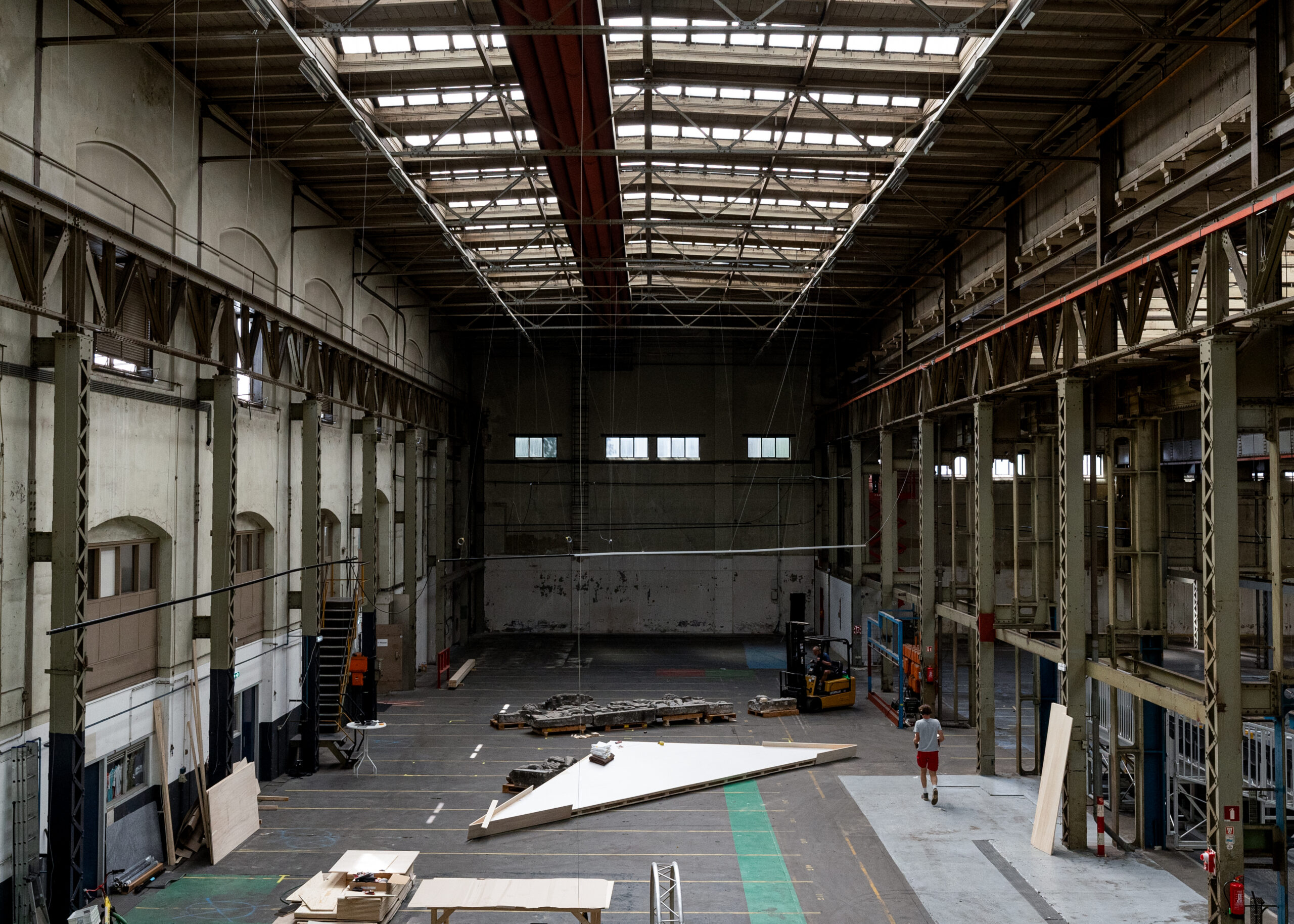
The Hunter Douglas industrial complex was built where the Pesthuis once stood, and this year the Piekfabriek on the former Hunter Douglas site is hosting the 12th International Architecture Biennale Rotterdam.
For the biennial, architectural firm LNML designed an installation in which the (re)use of stone takes center stage. The tympanum of Museum Rotterdam is part of this installation. The former industrial area is once again at the beginning of a major transformation. In the coming years, it will be given a new future with space for living, working, and amenities.
It is fantastic that a masterpiece from our city historical collection can be fully displayed again after more than a hundred years. This was always a problem due to its enormous size and weight. It is especially wonderful that, in doing so, it is also returning to the place where it came from .
— Curator and Historian Rob Noordhoek of Museum Rotterdam