
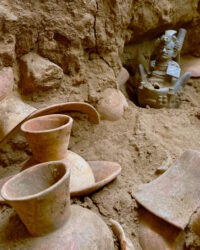
The 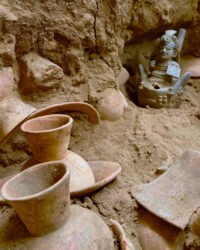 has been discovered at the Huaca de la Luna archaeological site in northern Peru. The tomb dates to the 6th or 7th century. It contains the skeletal remains of a small child who was no more than two years at time of death. The sex could not be determined from the initial osteological examination, but he or she was someone important.
Huaca de la Luna (Temple of the Moon) was one of two religious complexes in the ancient capital of the Moche culture, today known as Cerro Blanco, built less than three miles from the modern-day city of Trujillo and from the Pacific Coast. From the 3rd to the 9th century, Moche architects built platforms out of adobe blocks (huacas), then ritually filled them in, encased them in adobe blocks and built platforms on top of them. At least six phases of construction have been identified in the capital, using millions of adobe blocks. The increasingly enormous platforms were connected to each other by an intricate network of ramps and plazas, and smaller platforms were built next to the major huacas.
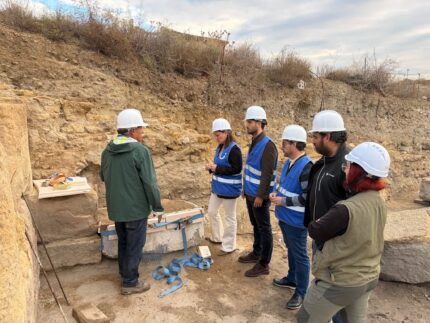
The team unearthed the tomb inside the Uhle Platform at the Huacas de Moche archaeological site in northern Peru. The Uhle Platform is a mausoleum, attached to the Huaca de la Luna temple, with a patio archaeologists call the Patio of the Serpents. Of the more than 80 burials previously uncovered there, the tomb represents the only known child to receive this sort of lavish burial.
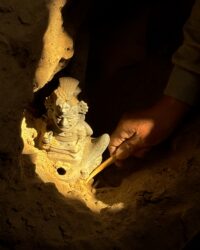 The tomb is large and could easily have been used to bury an adult even with all the grave goods, another indicator of the high status of the child. It contains 32 ceramic objects, most of them vessels. One rare object is a sculpture of a deity with a human body and the wings and tail of a bird. He holds a shield in one hand and a goblet in the other. On each side of him is a bird attendant garbed in ceremonial clothes. It’s possible that the sculpture represents a deity in the midst of transformation rather than a human-bird mixture. Because the Moche had no written language, there is debate among scholars about whether they worshipped a pantheon of multiple gods, or a small number who were capable of multiple transformations.
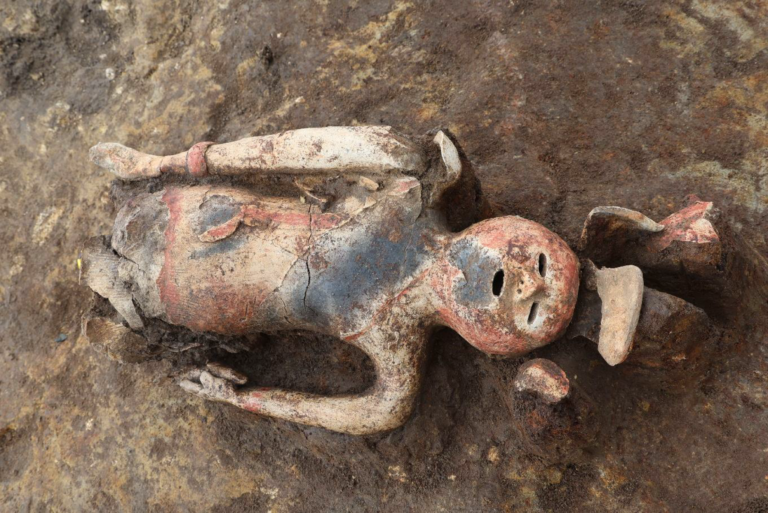
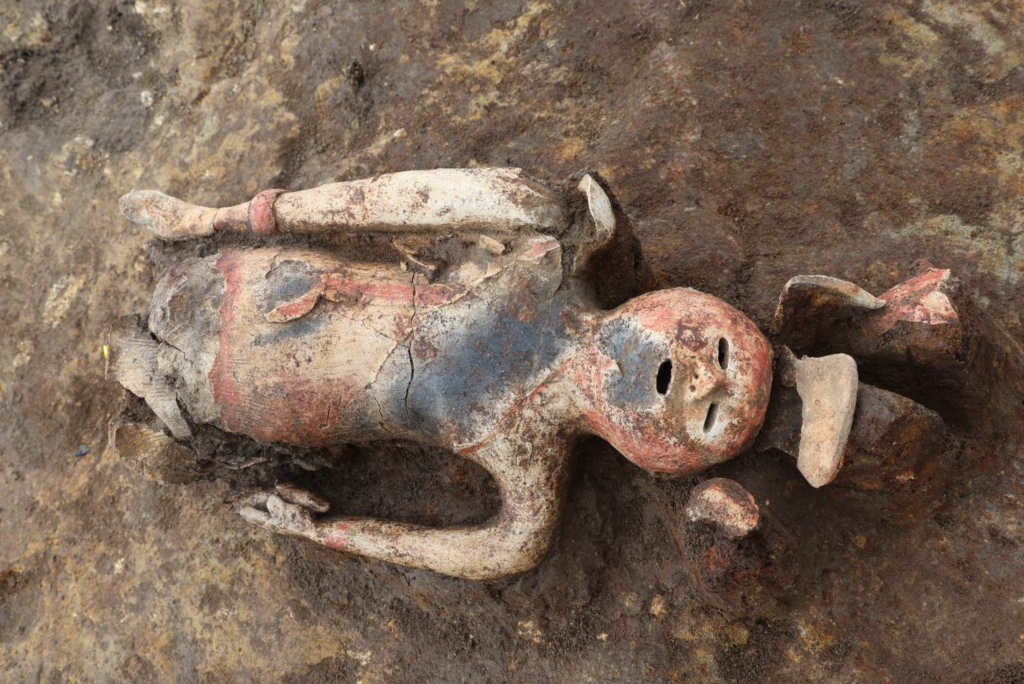
Another rare find is a pair of the ceramic prisoners of war.
The two prisoner sculptures are associated with the “ritual of combat,” a common theme in Moche art. In this sort of imagery, two warriors fight each other, and the loser is stripped of his clothes and weapons, tied around the neck with a rope and offered as a human sacrifice, Rengifo-Chunga said. The prisoners depicted on these two vessels were the losing warriors, and their presence in the burial of a child is rare.
“One would normally presume that these kinds of vessels represent something related to the deceased’s life,” Rengifo-Chunga said. For example, a vessel like this might signify that the individual took part in combat.
But a toddler couldn’t have taken part in such an activity. In general, archaeologists wouldn’t expect to see elements of an adult ritual in the burial of a child. “This expands our knowledge on Moche funerary practices,” he added.
The artifacts recovered from the tomb have been transferred to the laboratories of the Santiago Uceda Castillo Museum in Peru. There they will undergo scientific analysis and study and will be conserved for eventual display.